
Automated External Defibrillators
What is an automated external defibrillator?
An automated external defibrillator (AED) is a device that gives an electric shock to the heart. It can be placed on a person’s chest to restart the heart if it suddenly stops beating.
When is it used?
The AED treats a heart when the electrical signals in the heart stop working right. These problems can cause the heart to stop pumping blood to the brain and the rest of the body. This is called sudden cardiac arrest (SCA). SCA causes death if not treated right away.
AEDs can be used as part of CPR. Quickly using an AED improves the chances of getting the heart to start pumping again.
How does an AED work?
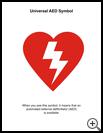
AEDs can be found in many public places and on some airplanes. You can find an AED by looking for the AED symbol, which looks like a heart with a lightening bolt in the middle.
When an AED is used, sticky patches or suction cups attached by wires to the machine are placed on the person's chest. The AED checks the person's heart rhythm, judges whether a shock is needed, and then gives the right level of shock. This can stop the abnormal heart rhythm and help the heart go back to beating in a more normal rhythm.
AEDs are less successful if someone has been in cardiac arrest for more than a few minutes, especially if no CPR was given.
Who can use an AED?
AEDs are designed to be used by people without medical training. This includes police, firefighters, flight attendants, security guards, and anyone who has been trained to use an AED. The American Red Cross includes AED training in many CPR training classes.
