
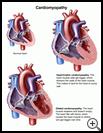
Dilated Cardiomyopathy
________________________________________________________________________
KEY POINTS
- Dilated cardiomyopathy is a disease in which the heart muscle weakens and can’t pump enough blood to the body.
- You may need treatment with medicines, a pacemaker, or in severe cases, a heart transplant.
- Ask your healthcare provider what symptoms or problems you should watch for and what to do if you have them.
________________________________________________________________________
What is dilated cardiomyopathy?
Dilated cardiomyopathy is a disease of the heart muscle. The heart muscle weakens and can’t pump enough blood to the body. When the heart can't pump well, it does not empty completely and the heart fills with blood. The extra blood causes the heart muscle to stretch, getting bigger (dilated) over time. The muscles in the rest of body may not get enough oxygen since the heart is not pumping enough blood.
Dilated cardiomyopathy is a common cause of heart failure and is the most common reason people get heart transplants. It happens in more men than women, and can happen in children also.
What is the cause?
Often what causes the heart to get bigger and weaker is not known. The heart muscle may be weakened by many things that can lead to cardiomyopathy:
- A genetic problem inherited from your parents
- Drug use, such as cocaine or amphetamines
- Pregnancy and childbirth
- A long-term illness, such as AIDS or diabetes
- High blood pressure
- Cancer treatments
- Coronary artery disease or heart attack
- Heavy alcohol use with poor nutrition over a long time
What are the symptoms?
Dilated cardiomyopathy may not cause symptoms. If it does, symptoms may include:
- Chest pain, especially after physical activity or heavy meals
- Shortness of breath
- Swelling of the legs or ankles
- Tiredness
- Dizziness
- Fainting during physical activity
- Fast or irregular heartbeat or a feeling like your heart is racing or fluttering
How is it diagnosed?
Your healthcare provider will ask about your symptoms and medical history and examine you. Tests may include:
- Chest X-ray
- An ECG (also called an EKG or electrocardiogram), which measures and records your heartbeat. You may have an ECG while you are resting or while you exercise on a treadmill. You may also be asked to wear a small portable ECG monitor for a few days or sometimes a couple of weeks.
- An echocardiogram, which uses sound waves (ultrasound) to see how well your heart is pumping and can show areas of heart muscle that are thick
- Angiogram, which is a series of X-rays taken after your healthcare provider injects contrast dye into your blood vessels to show the walls of the arteries and any blockage
- Biopsy, which is the removal of a small sample of heart tissue for testing
How is it treated?
- Your healthcare provider may prescribe medicines to:
- Lower your blood pressure and heart rate so that your heart does not have to work as hard
- Relax your blood vessels and lower your blood pressure to help your heart to pump more blood out to your body
- Help your body get rid of the extra fluid that can build up when your heart does not pump well
- Prevent blood clots that could block your arteries and cause a stroke
- Your healthcare provider may put a pacemaker or an implantable cardioverter-defibrillator (ICD) in your chest to treat your abnormal heart rhythms.
- A heart transplant may be an option if your severe symptoms do not get better with other treatments.
How can I take care of myself?
Follow the full course of treatment prescribed by your healthcare provider. In addition:
- Weigh yourself every morning before you eat or drink everything. Let your provider know if you suddenly gain weight. Ask your healthcare provider about how much liquid you should drink each day.
- Take care of your health. Try to get at least 7 to 9 hours of sleep each night. If you smoke, try to quit. If you want to drink alcohol, ask your healthcare provider how much is safe for you to drink. Learn ways to manage stress.
- Exercise according to your healthcare provider's instructions.
- Eat a healthy diet and try to keep a healthy weight. Ask your healthcare provider about limiting salt in your diet.
Ask your provider:
- How and when you will get your test results
- If there are activities you should avoid and when you can return to your normal activities
- How to take care of yourself at home
- What symptoms or problems you should watch for and what to do if you have them
Make sure you know when you should come back for a checkup. Keep all appointments for provider visits or tests.
