
Implantable Cardioverter Defibrillator (ICD)
________________________________________________________________________
KEY POINTS
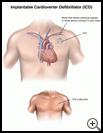
- An implantable cardioverter defibrillator (ICD) is a small battery-powered device that helps your heart beat in a normal rhythm. The ICD is placed under the skin in your chest or belly and is attached to wires that deliver electrical signals, or small electric shocks, to your heart if needed.
- You will need regular follow-up visits with your healthcare provider so the device can be monitored. You will learn how to check the function of the ICD at home and send information to your healthcare provider through a telephone.
- Tell all of your healthcare providers and dentists that you have an ICD. Carry an ID card or wear a medical ID bracelet or necklace to let emergency healthcare providers know that you need special care.
________________________________________________________________________
What is an ICD?
An implantable cardioverter defibrillator (ICD) is a small battery-powered device that helps your heart beat in a normal rhythm. The ICD device is placed under the skin in your chest or belly. You will be able to feel the device under your skin. It’s about the size of a large watch. The ICD is attached to wires that deliver electrical signals, or small electric shocks, to your heart. Your healthcare provider sets it to monitor your heart rhythm and send electrical signals to your heart, if needed. The electric signals cause your heart to beat in a regular pattern.
When your heart is beating normally, the ICD does nothing. If the ICD detects a heart rhythm that is too fast, too slow, or irregular, the device first tries to control the heart rhythm with low-level electric signals, like a pacemaker. If this doesn't work, or the rhythm gets worse, the ICD sends a high-level shock to your heart. The electric shock changes the abnormal rhythm to a normal rhythm. You will feel the shock and it may be slightly painful.
Before you have a permanent ICD, you may need a temporary pacemaker. The wires of a temporary pacemaker are also inserted through a vein and into your heart. The temporary device is larger and will be placed near you at your bedside or in a shirt pocket.
When is it used?
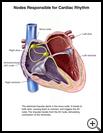
Normally, an electrical signal in your heart starts each heartbeat, causing the heart muscle to squeeze (contract). This signal starts in the upper right chamber of the heart (the right atrium). The signal then follows normal pathways to the upper left atrium and to the lower chambers of the heart (the ventricles). When your heart cannot beat regularly because of a problem with the electrical signal or damage to your heart, you may need an ICD. Most ICDs can act as both a pacemaker and an ICD. ICDs can help heart conditions such as:
- Life-threatening heart rhythms, which may be caused by a heart attack, heart disease, or other health problems. An ICD can be life saving if you have a life-threatening heart rhythm or if your heart stops suddenly.
- A very slow, very fast, or irregular heart rhythm. A pacemaker can speed up a slow rhythm or control a very fast or irregular rhythm.
- Atrial fibrillation, which is a condition that causes the upper chambers of the heart (atria) to beat very fast and not in a normal pattern. A pacemaker can signal the lower chambers of your heart to beat if the upper chambers are not beating in a normal pattern.
- Heart failure, which means the heart is not pumping blood as well as it should. A pacemaker can help coordinate the electrical signals between the two lower chambers of your heart so that your heart pumps more effectively. This treatment is called cardiac resynchronization therapy (CRT). An ICD that can do cardiac resynchronization therapy is called CRT-D.
Some devices can also monitor your blood temperature and breathing and adjust your heart rate when you are physically active.
How can I take care of myself when I have an ICD?
Once you have an ICD, you will probably have fewer heart and breathing symptoms and feel better than you did before the procedure. Your heart may beat in a normal rhythm, and you may be able to go back to a more normal lifestyle. Following or continuing to follow a heart-healthy lifestyle may help.
- Talk to your healthcare provider about your personal and family medical history and your lifestyle habits. This will help you know what you can do to lower your risk for future heart problems.
- Eat a healthy diet.
- Try to keep a healthy weight. If you are overweight, lose weight.
- Stay fit with the right kind of exercise for you.
- Limit caffeine.
- Learn to manage stress.
- If you smoke, try to quit.
- If you want to drink alcohol, ask your healthcare provider how much is safe for you to drink.
- Try to get at least 7 to 9 hours of sleep.
You will need regular follow-up visits with your healthcare provider so the device can be monitored. At your follow-up visit, your provider will check your ICD settings, the battery, and your heart. The batteries last about 6 to 10 years. When your battery runs down, you will need minor surgery to replace the device.
You will learn how to check the function of the ICD at home and send information to your healthcare provider through a telephone.
You will need to avoid equipment that may interfere with your ICD. For example, you will need to keep cell phones and other mobile devices at least 6 inches away from your device and avoiding power-generating equipment, arc-welding equipment. Equipment that generally will not interfere with your ICD includes radios, electric drills, heating pads, electric shavers, microwave ovens, and televisions.
Tell all of your healthcare providers and dentists that you have an ICD. Some tests and treatments can interfere with your ICD, such as magnetic resonance imaging, radiation treatment for cancer, deep heat treatment, and shock wave treatment to dissolve kidney stones. Your ICD may need a different set-up if you need one of these treatments, or your provider may recommend different tests or treatments.
Some medicines and supplements can change your heart rate, which may affect how your ICD works. Keep a list of your medicines with you. List all of the prescription medicines, nonprescription medicines, supplements, natural remedies, and vitamins that you take. Tell all healthcare providers who treat you about all of the products you are taking.
Carry an ID card or wear a medical ID bracelet or necklace that says you have an ICD. If you become unconscious, the ID will let emergency healthcare providers know that you need special care.
You can get more information from:
- American Heart Association
800-242-8721
http://www.heart.org/HEARTORG/
