
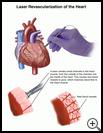
Laser Revascularization of the Heart
________________________________________________________________________
KEY POINTS
- Laser revascularization uses a laser to create small channels in the lower left heart muscle, which improves blood flow to the heart.
- This procedure may be done if you have severe chest pain and other treatments have not helped, or if tests show that your heart muscle is not getting enough blood.
- Ask your provider how long it will take to recover and how to take care of yourself at home.
- Make sure you know what symptoms or problems you should watch for and what to do if you have them.
________________________________________________________________________
What is laser revascularization of the heart?
Laser revascularization of the heart is a procedure to treat angina (chest pain) when other treatments have not helped. A laser is used to create small channels in the damaged lower left heart muscle, from the outside of the chamber into the inside of the heart. Although healthcare providers don't know exactly how this helps the heart, it is most likely that the procedure causes new blood vessels to grow, which improves blood flow to the heart muscle.
Another term for this procedure is transmyocardial laser revascularization (TMR).
When is it used?
TMR may be done if:
- You have severe chest pain that limits your daily activities or wakes you up at night, even after taking medicine for the pain.
- Medical tests show that your heart muscle is not getting enough blood.
- You previously had bypass surgery or angioplasty and still have angina.
TMR is often done at the same time as coronary bypass surgery.
This procedure is not recommended if:
- Your heart muscle is severely damaged or scarred from heart attacks.
- Your heart is getting enough blood.
Ask your healthcare provider about your choices for treatment and the risks.
How do I prepare for this procedure?
- Make plans for your care and recovery after you have the procedure. Find someone to give you a ride home after the procedure. Allow for time to rest and try to find other people to help with your day-to-day tasks while you recover.
- Follow your provider's instructions about not smoking before and after the procedure. Smokers may have more breathing problems during the procedure and heal more slowly. It is best to quit 6 to 8 weeks before surgery.
- You may or may not need to take your regular medicines the day of the procedure. Tell your healthcare provider about all medicines and supplements that you take. Some products may increase your risk of side effects. Ask your healthcare provider if you need to avoid taking any medicine or supplements before the procedure.
- Tell your healthcare provider if you have any food, medicine, or other allergies such as latex.
- Your healthcare provider will tell you when to stop eating and drinking before the procedure. This helps to keep you from vomiting during the procedure.
- Follow any instructions your healthcare provider may give you.
- Ask any questions you have before the procedure. You should understand what your healthcare provider is going to do. You have the right to make decisions about your healthcare and to give permission for tests or procedures.
What happens during the procedure?
You will be given general anesthesia to keep you from feeling pain during the procedure. General anesthesia relaxes your muscles and puts you into a deep sleep.
Your healthcare provider will make a small cut in the left side or the middle of your chest. Your provider will then use a laser to create 20 to 40 channels in your heart. Each channel is about the width of the head of a pin. The outer areas of the channels will close so that the heart does not leak blood after the procedure.
This procedure usually takes 1 to 2 hours. It may last longer if other procedures are done at the same time.
What happens after the procedure?
You will stay in the hospital for 1 or more days, depending on your overall health and how quickly you recover.
Follow your healthcare provider's instructions. Ask your provider:
- How long it will take to recover
- If there are activities you should avoid and when you can return to your normal activities
- How to take care of yourself at home
- What symptoms or problems you should watch for and what to do if you have them
Make sure you know when you should come back for a checkup. Keep all appointments for provider visits or tests.
What are the risks of this procedure?
Every procedure or treatment has risks. Some possible risks of this procedure include:
- You may have problems with anesthesia.
- You may have infection or bleeding.
- You may have an abnormal heartbeat, heart attack, or a buildup of fluid around the heart.
Ask your healthcare provider how these risks apply to you. Be sure to discuss any other questions or concerns that you may have.
