
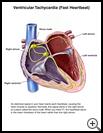
Ventricular Tachycardia (Fast Heartbeat)
________________________________________________________________________
KEY POINTS
- Ventricular tachycardia is a change in your heart rate. Your heartbeat is too fast, and the heartbeat starts in the wrong part of the heart. You may be lightheaded or faint, or you may have a higher risk of sudden death.
- Treatment may include medicine, cardiac ablation, or insertion of an internal cardiac defibrillator.
- Ask your healthcare provider how to take care of yourself at home, what symptoms or problems you should watch for, and what to do if you have them.
________________________________________________________________________
What is ventricular tachycardia?
Ventricular tachycardia (also called VT or V tach) is a change in your heart rate, or the number of beats per minutes. Your heartbeat is too fast (120 to 170 beats per minute or higher), and the heartbeat starts in the wrong part of the heart.
For some people, VT lasts just a short time and the heart goes back to a normal rhythm on its own. However, If VT lasts more than 30 seconds, you may have lightheadedness or fainting with the fast heartbeat, or your heart muscle has been weakened from heart disease, you may have a higher risk of sudden death.
What is the cause?
An electrical signal in your heart starts each heartbeat, causing the heart muscle to squeeze (contract). Normally, this signal starts in the upper right chamber of the heart (the right atrium) at a place called the sinus node. The signal then follows pathways to the upper left atrium and to the lower chambers of the heart (the ventricles).
When you have VT, the heartbeat starts in the lower chambers of the heart rather than the right atrium. This may happen if:
- You have heart disease, such as heart failure, or you’ve had a heart attack
- You have abnormal heart muscle from a birth defect, an infection, or an accident
- You take certain medicines
What are the symptoms?
The main symptom is feeling your heart beat fast or a having a pounding feeling in your chest. Other symptoms may include:
- Lightheadedness or fainting
- Weakness and sweatiness
- Chest pain
- Shortness of breath
- Nausea
Contact your healthcare provider if you have any of these symptoms in addition to a fast heartbeat.
How is it diagnosed?
Your healthcare provider will ask about your symptoms and medical history and examine you. Tests may include:
- Blood tests
- Chest X-rays
- An ECG (also called an EKG or electrocardiogram), which measures and records your heartbeat. You may have an ECG while you are resting or while you exercise on a treadmill. You may also be asked to wear a small portable ECG monitor for a few days or longer.
- An electrophysiology study, which uses tiny wires put into your heart through your veins to look at the electrical paths in your heart
- A coronary angiogram (cardiac catheterization), which uses X-rays and a special dye to find blood vessels that are blocked or leaking
How is it treated?
VT may be treated with:
- Medicine to slow your heart rate
- Ablation, which uses a small tube called a catheter to deliver electrical pulses to the inside of the heart. The electrical pulses make small scars that block abnormal electrical pathways. This helps you have a regular heart rhythm.
- An implantable cardiac defibrillator (ICD), which is a device that can shock the heart back to a regular rhythm
- Surgery to open up or bypass blocked blood vessels
You will also receive treatment for any health problems you have that may be causing VT. If your heart does not pump well, your healthcare provider may prescribe medicines to help it pump better.
How can I take care of myself?
If you have heart disease or other medical problems, follow your treatment plan. Be sure to take all medicines as prescribed by your provider.
Try to have a heart-healthy lifestyle:
- Eat a healthy diet.
- Try to keep a healthy weight. If you are overweight, lose weight.
- Stay fit with the right kind of exercise for you. Ask your healthcare provider what types of exercise are right for you.
- Learn ways to manage stress.
- If you smoke, try to quit. Talk to your healthcare provider about ways to quit smoking.
- If you want to drink alcohol, ask your healthcare provider how much is safe for you to drink.
Ask your provider:
- How and when you will get your test results
- How long it will take to recover
- If there are activities you should avoid and when you can return to your normal activities
- If there are medicines you should avoid
- How to take care of yourself at home
- What symptoms or problems you should watch for and what to do if you have them
Make sure you know when you should come back for a checkup. Keep all appointments for provider visits or tests.
How can I help prevent ventricular tachycardia?
There is no specific way to prevent ventricular tachycardia, but having a healthy lifestyle can help prevent heart disease, which can cause VT.
