
Atrial Fibrillation
________________________________________________________________________
KEY POINTS
- Atrial fibrillation is an irregular heartbeat that starts in the upper chambers of the heart and affects the ability of the heart to pump blood to the rest of the body.
- You may need treatment with medicine, electric cardioversion, or an ablation procedure.
- Follow your healthcare provider’s advice about exercising, eating a healthy diet, watching your weight, not smoking, and checking your blood pressure.
________________________________________________________________________
What is atrial fibrillation?
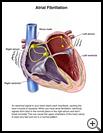
Atrial fibrillation (also called A-fib) is an irregular heartbeat that starts in the upper chambers of the heart (atria). The abnormal heartbeat affects the ability of the heart to pump blood to the rest of the body.
What is the cause?
An electrical signal in your heart starts each heartbeat, causing the heart muscle to squeeze (contract). Normally, this signal starts in the upper right chamber of the heart (the right atrium) at a place called the sinus node. The signal then follows normal pathways to the upper left atrium and to the lower chambers of the heart (the ventricles).
When you have atrial fibrillation, electrical signals don’t start in the normal place in the right atrium and don’t travel normally. This can cause the upper chambers of the heart to beat very fast and not in a normal pattern.
Common causes of heart rhythm problems are conditions that damage the heart, like coronary artery disease, heart attack, or heart failure.
Problems with the heart valves are another common cause. The heart has 4 valves that open and close with each heartbeat to help blood flow in the right direction through the heart.
Other causes of atrial fibrillation include:
- Health problems, such as a stroke, lung disease, diabetes, overactive thyroid gland, or high blood pressure
- Abuse of alcohol or drugs, such as cocaine
Sometimes no cause can be found.
What are the symptoms?
Some people don’t have any symptoms. When atrial fibrillation does cause symptoms, the most common ones are:
- Feeling like your heart is beating too fast or too hard or skipping beats or fluttering
- Feeling tired or weak all the time
Symptoms that are more serious include:
- Chest pain
- Trouble breathing
- Lightheadedness or dizziness
- Confusion
How is it diagnosed?
Your healthcare provider will ask about your symptoms and medical history and examine you.
Tests may include:
- An ECG (also called an EKG), which measures and records your heartbeat. You may have an ECG while you are resting or while you exercise on a treadmill. You may also be asked to wear a small portable ECG monitor for a few days or sometimes a couple weeks.
- Blood tests
- An echocardiogram, which uses sound waves (ultrasound) to show the structures of the heart, like the valves and to check for blood clots in the heart
How is it treated?
The goal of treatment is to lower the risk of blood clots forming in the heart that can cause a stroke or problems with other organs in the body. Another goal is help the heart keep a normal rhythm. Your treatment depends on the cause of the atrial fibrillation, how often you have symptoms, and the severity of your symptoms.
If you have no symptoms, or your symptoms are fairly mild, you may just need treatment to prevent blood clots. For some people atrial fibrillation lasts just a short time and the heart goes back to a normal rhythm on its own. If your healthcare provider finds a cause such as a thyroid problem or a heart valve problem, you may get treatment for those problems.
Along with treatment to prevent blood clots, other possible treatments are:
- Medicine: Your provider may prescribe medicine to slow or restore a normal heart rate and rhythm.
- Electrical cardioversion: After receiving medicine to make you sleepy, an electrical shock applied to your chest should make your heart start beating normally again. You may need medicine to keep your heart rhythm normal after this procedure.
- Ablation: Ablation is a procedure that uses a small tube called a catheter to deliver energy to the inside of the heart. The energy (usually radio waves) scars small areas of heart tissue. The scars block abnormal electrical pathways and help you have a normal heart rhythm. With some types of ablation treatment, you will also need a pacemaker. A pacemaker is an electronic device put under the skin of your chest to help control the heartbeat.
How can I take care of myself?
- Take your medicines as prescribed.
- Keep your appointments for follow-up blood tests.
- Make sure your healthcare provider knows about changes in your diet or medical condition. Your provider also needs to know about all prescription and nonprescription medicines, herbs, or supplements that you are taking. Some medicines may interact with your heart medicine or increase your risk for atrial fibrillation.
- If you want to drink alcohol, ask your provider how much is safe for you to drink.
- Follow your healthcare provider's instructions. Ask your provider:
- How and when you will get your test results
- How long it will take to recover
- If there are activities you should avoid and when you can return to your normal activities
- How to take care of yourself at home
- What symptoms or problems you should watch for and what to do if you have them
- Make sure you know when you should come back for a checkup. Keep all appointments for provider visits or tests.
How can I help prevent atrial fibrillation?
The best prevention is to have a heart-healthy lifestyle.
- Keep a healthy weight.
- Eat a healthy diet that is low in sodium and saturated and trans fat.
- Stay fit with the right kind of exercise for you.
- Decrease stress.
- Don’t smoke.
- Limit your use of alcohol.
If you have heart disease or high blood pressure, follow your healthcare provider's instructions for treatment.
