
Atrioventricular Canal Defect
_____________________________________________________________________
KEY POINTS
- An atrioventricular canal defect is a birth defect of the heart. It causes blood to flow where it should not. The heart has to work harder and it gets bigger.
- This birth defect is usually treated with surgery in childhood.
- Treatment may include medicines and regular follow up visits.
- Make sure that you stay up to date with the recommended vaccines, such as flu and pneumococcal shots.
________________________________________________________________________
What is an atrioventricular canal defect?
An atrioventricular canal defect (AVCD) is a birth defect of the heart.
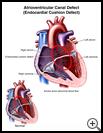
The heart normally has 2 upper chambers (atria) and 2 lower chambers (ventricles). The wall of tissue that separates the right and left sides of the heart is called the septum. A normal heart has 2 heart valves that separate the upper and lower chambers. The valves and septum together are called the atrioventricular canal. Normally the left side of the heart pumps blood to the body, and the right side pumps blood to the lungs.
In AVCD, there are holes in the walls between the chambers of the heart, and the valves that control blood flow may not work well. With AVCD, blood flows where it should not and more blood gets pumped into the lungs. The heart has to work harder and it gets bigger.
AVCD is also called atrioventricular septal defect or endocardial cushion defect.
What is the cause?
The cause of this birth defect is not known. It is most common in babies with Down syndrome.
What are the symptoms?
AVCD is usually repaired several months after birth. Many adults do not have problems if they were treated as children. If you do have symptoms, they may include:
- Feeling like your heart is beating too fast or too hard or skipping beats or fluttering
- Shortness of breath or trouble breathing
- Feeling very tired or weak all the time
- Dizziness or fainting
- Swollen ankles and feet and weight gain due to too much fluid in the body
- Chest pain
Many defects cause a whooshing sound, called a murmur, as blood moves through the heart. Healthcare providers can hear the murmur with a stethoscope.
How is it diagnosed?
Your healthcare provider will ask about your symptoms and medical history and examine you. Tests may include:
- An ultrasound, which uses sound waves to show pictures of the heart
- An echocardiogram, which uses sound waves (ultrasound) to show pictures of the heart and how well blood is flowing through it
- A chest X-ray
- An ECG (also called an EKG or electrocardiogram), which measures and records your heartbeat
Sometimes heart catheterization may be needed. A catheter is a very thin tube that is passed through a blood vessel into the heart. The pressure in the chambers of the heart is measured and blood samples can be taken.
How is it treated?
Most people who had AVCD surgery in childhood only need regular follow-up visits with a specialist in congenital heart disease. If you do have symptoms later in life, treatment may include medicine to:
- Expand blood vessels and improve blood flow
- Lower blood pressure
- Prevent blood clots
- Help your heart pump
In very rare cases, you may need heart catheterization or surgery.
How can I take care of myself?
Follow the full course of treatment prescribed by your healthcare provider. In addition:
- Take care of your health. Try to get at least 7 to 9 hours of sleep each night. If you smoke, try to quit. If you want to drink alcohol, ask your healthcare provider how much is safe for you to drink. Learn ways to manage stress. Try to keep a healthy weight. If you are overweight, lose weight. Exercise according to your healthcare provider's instructions.
- Make sure that you are up to date with the recommended vaccines, such as flu and pneumococcal shots.
Ask your provider:
- How and when you will get your test results
- If there are activities you should avoid and when you can return to your normal activities
- How to take care of yourself at home
- What symptoms or problems you should watch for and what to do if you have them
Make sure you know when you should come back for a checkup. Keep all appointments for provider visits or tests.
