
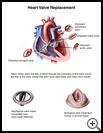
Heart Valve Replacement
________________________________________________________________________
KEY POINTS
- Heart valves direct the flow of blood through the heart and to the rest of the body. Valves that don't work right make your heart work harder.
- This surgery is done only when medicines or procedures to open or repair your heart valve will not work.
- Ask your provider how long it will take to recover and how to take care of yourself at home.
- Make sure you know what symptoms or problems you should watch for and what to do if you have them.
________________________________________________________________________
What is a heart valve replacement?
Heart valves direct the flow of blood through the chambers of the heart and to the rest of the body. Valves that don't work right make your heart work harder. A heart valve replacement is often open heart surgery done to replace a valve in your heart with an artificial valve. It may also be done without opening your chest, using a catheter to place the new valve. A catheter is a very thin, flexible tube.
Two types of artificial heart valves are available:
- Mechanical valves are made completely from man-made materials. When you have a mechanical valve, you must take blood-thinning drugs for the rest of your life to reduce the risk of blood clots. The main advantage of mechanical valves is that they usually last 20 years or more.
- Biological valves are made from human or animal tissue. The main advantage of a biological valve is that you do not need to take blood-thinning drugs for the rest of your life. These valves usually do not last for more than 15 years.
After this surgery, your heart may be able to work well again, improving your quality of life. In many cases valve replacement will help you live longer.
When is it used?
The surgery may be done when a valve in your heart does not open all the way or doesn’t close all the way. A valve may leak or stop working because it is damaged by disease or because it was abnormal at birth.
This surgery is done only when medicines or procedures to open or repair your heart valve will not work.
How do I prepare for this procedure?
- Make plans for your care and recovery after you have the procedure. Find someone to give you a ride home after the procedure. Allow for time to rest and try to find other people to help with your day-to-day tasks while you recover.
- You may or may not need to take your regular medicines the day of the procedure. Tell your healthcare provider about all medicines and supplements that you take. Some products may increase your risk of side effects. Ask your healthcare provider if you need to avoid taking any medicine or supplements before the procedure.
- Tell your healthcare provider if you have any food, medicine, or other allergies such as latex.
- Your healthcare provider will tell you when to stop eating and drinking before the procedure. This helps to keep you from vomiting during the procedure.
- Follow your provider's instructions about not smoking before and after the procedure. Smokers may have more breathing problems during the procedure and heal more slowly. It’s best to quit 6 to 8 weeks before surgery.
- Follow any other instructions your healthcare provider gives you.
- Ask any questions you have before the procedure. You should understand what your healthcare provider is going to do. You have the right to make decisions about your healthcare and to give permission for any tests or procedures.
What happens during the procedure?
You will be given a general anesthetic to keep you from feeling pain. General anesthesia relaxes your muscles and puts you into a deep sleep.
If you have the open-heart surgery, your healthcare provider will make a cut in your chest and divide your breastbone to open your chest. You will be connected to a heart-lung machine, which will take over the work of your heart and lungs during the surgery. Your provider will then stop your heart and make a cut in your heart to reach the valve. He or she will remove the valve and replace it with an artificial one. Your healthcare provider will close the cut in your heart and restart your heart. Your provider will wire your breastbone together and close the skin with stitches. Some tubes will be left in your chest to drain blood and fluid.
If you have the procedure using a catheter, your healthcare provider will put a catheter through a vein in your groin or through a cut made between two ribs. X-rays and contrast dye injected through the catheter may be used to help show where the catheter is as your provider moves the catheter to the heart valve. The new valve comes tightly wrapped around a deflated balloon at the tip of the catheter. Your provider will inflate the balloon to place the new valve in the correct place. The balloon is then deflated, and the catheter and balloon are removed.
What happens after the procedure?
You may need to be in the intensive care unit (ICU) for the first few days. You may then go to a regular hospital room for a few more days.
Ask your healthcare provider:
- How long it will take to recover
- If there are activities you should avoid and when you can return to your normal activities
- How to take care of yourself at home
- What symptoms or problems you should watch for and what to do if you have them
Make sure you know when you should come back for a checkup. Keep all appointments for provider visits or tests.
What are the risks of this procedure?
Every procedure or treatment has risks. Some possible risks of this procedure include:
- You may have problems with anesthesia.
- In rare cases, you may have an allergic reaction to medicines used during the procedure.
- You may have infection, bleeding, or blood clots.
- Other parts of your body may be injured during the procedure.
Ask your healthcare provider how these risks apply to you. Be sure to discuss any other questions or concerns that you may have.
