
Pulmonary Embolism
________________________________________________________________________
KEY POINTS
- A pulmonary embolism is a blood clot that travels through a blood vessel to one of your lungs. It can be a life-threatening problem.
- The treatment depends on the cause and how severe your symptoms are. Your provider may prescribe medicines to break down the blood clot or keep more from forming. You may need to stay in the hospital. You may need surgery.
- If you are taking a blood thinner, make sure you understand how to take your medicines and follow the instructions exactly. Ask your provider how to take care of yourself at home.
________________________________________________________________________
What is a pulmonary embolism?
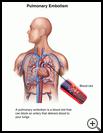
A pulmonary embolism is a blood clot that travels through a blood vessel to one of your lungs. It can be a life-threatening problem.
What is the cause?
When blood clots, it changes from a liquid to a solid. This is part of your body's normal response to an injury. Normal clotting starts within seconds after an injury and seals damaged blood vessels so that you don’t lose too much blood. As your body heals, the clots dissolve and are absorbed by your body without causing problems.
Sometimes blood clots form inside the blood vessels, usually in leg veins. Clots can break into pieces and float in the bloodstream until they block a smaller blood vessel, such as an artery in your lungs.
Your risk of blood clots is higher if:
- You have an injury to a vein such as from an IV, surgery, a broken leg, or a severe bruise.
- You have slow blood flow from not being able to move for long periods, such as during a car or airplane ride, or if you are on bedrest after surgery or because of an injury
- You have a health problem that affects blood flow, such as being very overweight, varicose veins, kidney disease, cancer, HIV, or an immune system disorder such as lupus or rheumatoid arthritis. The immune system is your body’s defense against infection.
- You have increased hormone levels from using birth control pills, hormone replacement therapy, or during pregnancy.
- You have inherited genes that cause your blood to clot too much.
Your risk for blood blots may be higher if you smoke, or if you have health problems such as diabetes or high cholesterol levels.
What are the symptoms?
Symptoms may include:
- Chest pain (often it hurts when you take a deep breath)
- Shortness of breath
- Dizziness
- Fever
- Coughing up blood
- Swelling of veins in your neck or swelling in your legs
- Feeling anxious
- Lightheadedness or fainting
How is it diagnosed?
Your healthcare provider will ask about your symptoms and medical history and examine you. Tests may include:
- Chest X-ray
- CT scan, which uses X-rays and a computer to show detailed pictures of the chest
- An ECG (also called an EKG or electrocardiogram), which measures and records your heartbeat
- Arterial blood gas (ABG), which is blood test to measure the levels of oxygen and carbon dioxide in your blood
- Lung scan which uses a small amount of radioactive material injected into your blood or inhaled to make detailed pictures of your lungs
- An ultrasound, which uses sound waves to show pictures of your legs to look for clots
- Pulmonary angiogram, which is a series of X-rays taken after your healthcare provider places a thin, flexible tube (catheter) into a blood vessel in your groin and up to your heart and injects contrast dye into your blood vessels to check how the blood is flowing through the arteries in your heart and lungs
How is it treated?
Usually you will need to stay at the hospital for treatment. The treatment depends on the cause and how severe your symptoms are. Your provider may prescribe medicines to break down the blood clot or keep more from forming.
If you are very ill, you may need surgery to remove the clot and improve blood flow through your lungs.
If you keep having blood clots, you may have surgery to put a small plastic filter in the large vein in your belly that returns blood to the heart. The filter can trap blood clots and prevent them from reaching your lungs.
If you have a very high risk of getting more clots, you may need to take blood thinners for the rest of your life.
How can I take care of myself?
Follow the full course of treatment prescribed by your healthcare provider. In addition:
- If you are taking a blood thinner:
- Make sure you understand how to take your medicines and follow the instructions exactly.
- Depending on the type of blood thinner you take, you may need blood tests often. Make sure you have all the blood tests recommended by your provider. The tests check how well the blood thinner is working.
- Avoid pain medicines such as aspirin, ibuprofen (Motrin, Advil), and naproxen (Naprosyn, Aleve). Nonsteroidal anti-inflammatory medicines (NSAIDs), such as ibuprofen, naproxen, and aspirin, may cause stomach bleeding and other problems. These risks increase with age.
- Be sure that you tell all healthcare providers who treat you about all of the products (prescription, nonprescription, supplements, natural remedies, and vitamins) that you are taking.
- Blood thinners will make you bleed more than usual. To help prevent cuts, consider wearing rubber gloves or garden gloves for household and outdoor work. Don't walk barefoot.
- Take care of your health. Try to get at least 7 to 9 hours of sleep each night. If you smoke, try to quit. If you want to drink alcohol, ask your healthcare provider how much is safe for you to drink. Learn ways to manage stress. Exercise according to your healthcare provider's instructions.
- Keep your legs raised when you are in bed or sitting down. Wear special elastic stockings if prescribed by your healthcare provider.
Ask your provider:
- How and when you will get your test results
- If there are activities you should avoid and when you can return to your normal activities
- How to take care of yourself at home
- What symptoms or problems you should watch for and what to do if you have them
Make sure you know when you should come back for a checkup. Keep all appointments for provider visits or tests.
How can I help prevent a pulmonary embolism?
- Exercise as recommended by your healthcare provider.
- Avoid sitting or standing for long periods of time. When you are traveling, move your feet and legs often. Go for short walks if possible. Avoid crossing your legs and ankles when you sit.
- Unless your healthcare provider has asked you to limit liquids, drink plenty of fluids.
- If you are planning surgery, ask your provider what can be done to prevent blood clots.
- Keep a healthy weight. If you are overweight, try to lose some weight.
- Stop smoking. Smoking increases the risk for blood clots.
