
Mitral Valve Prolapse
________________________________________________________________________
KEY POINTS
- Mitral valve prolapse is when the mitral valve in your heart is floppy and does not close all the way.
- If your mitral valve prolapse doesn’t cause problems, you do not need treatment. If your heart rate is often fast or irregular, or if your valve leaks more over time, your healthcare provider may prescribe medicine to help your heart rhythm stay normal.
- It helps if you quit smoking, exercise as your provider recommends, eat a healthy diet, and watch your weight and blood pressure. You should also learn to manage stress, and protect yourself against infections.
________________________________________________________________________
What is mitral valve prolapse?
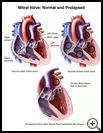
Mitral valve prolapse is when the mitral valve in your heart is floppy and does not close all the way. The mitral valve is located between the upper and lower parts of your heart on the left side. Before each heart beat, the upper part of your heart fills with oxygen-rich blood that has passed through your lungs and the mitral valve opens. Then your heart muscle squeezes to push blood into the lower part. At the end of the squeeze, the valve normally closes tightly so that blood flows in just 1 direction through your heart. When it does not close all the way, the valve may sometimes leak, letting small amounts of blood flow backward into the upper part of your heart. When blood flows backward, it is called mitral regurgitation.
Many people have mitral valve prolapse, but it is usually mild and causes no problems.
What is the cause?
The cause of mitral valve prolapse is not always known. It often runs in families. It may be caused by:
- An abnormal mitral valve that you were born with
- A disease such as Marfan syndrome that causes body tissues to be weak
What are the symptoms?
Most people have no symptoms. However, sometimes you may have brief periods of a fast heartbeat or skipped beats. You may notice these changes more when you are physically active. If you have these symptoms, tell your healthcare provider.
How is it diagnosed?
Your healthcare provider will ask about your symptoms and medical history and examine you. Your provider will use a stethoscope to listen for the sound of a heart murmur caused by the blocked valve.
Tests may include:
- An ECG (also called an EKG or electrocardiogram), which measures and records your heartbeat. You may have an ECG while you are resting or while you exercise on a treadmill.
- An echocardiogram, which uses sound waves (ultrasound) to see how well your heart is pumping
How is it treated?
If your mitral valve prolapse doesn’t cause problems, you do not need treatment. If your heart rate is often fast or irregular, or if your valve leaks more over time, your healthcare provider may prescribe medicine to help your heart rhythm stay normal. In very rare cases you may need surgery to repair your mitral valve.
How can I take care of myself?
Follow the full course of treatment prescribed by your healthcare provider.
A healthy lifestyle may also help:
- Eat a healthy diet. Ask your provider about the benefits of talking to a dietitian to learn what you need in a healthy diet.
- Try to keep a healthy weight. If you are overweight, lose weight.
- Stay fit with the right kind of exercise for you.
- Limit caffeine.
- Learn to manage stress. Ask for help at home and work when the load is too great to handle. Find ways to relax. For example take up a hobby, listen to music, watch movies, or take walks. Try yoga, meditation, or deep breathing exercises when you feel stressed.
- If you smoke, try to quit. Talk to your healthcare provider about ways to quit smoking.
- If you want to drink alcohol, ask your healthcare provider how much is safe for you to drink.
- Try to get at least 7 to 9 hours of sleep each night.
Ask your healthcare provider:
- How and when you will get your test results
- How to take care of yourself at home
- What symptoms or problems you should watch for and what to do if you have them
Make sure you know when you should come back for a checkup.
Tell all other healthcare providers you see that you have mitral valve prolapse. Damaged or abnormal heart valves are more likely to get infected by bacteria, which can cause severe problems. Antibiotics can prevent this. Ask your healthcare provider if you should take an antibiotic before any kind of dental work or surgery. This includes having your teeth cleaned or procedures involving the bladder, vagina, or rectum.
