
Heart Attack
________________________________________________________________________
KEY POINTS
- A heart attack happens when blood and oxygen suddenly cannot reach your heart muscle. This causes damage to your heart.
- Heart attacks require immediate hospital treatment. You may need medicine or surgery when you have a heart attack.
- Following a heart healthy lifestyle may help treat or prevent a heart attack. For example, eat a healthy diet, exercise, and don’t smoke.
________________________________________________________________________
What is a heart attack?
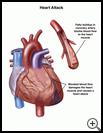
A heart attack happens when blood flow to part of the heart is suddenly blocked. When blood and oxygen cannot reach the heart muscle, the muscle is damaged. If the blood flow is blocked too long, the heart muscle dies. When the muscle dies, the heart cannot pump blood to the rest of the body as well as it should. Too much damage to the heart can cause death.
A heart attack is also called a myocardial infarction, or MI.
What is the cause?
Heart attacks are caused by a problem with the blood vessels that bring blood and oxygen to the heart muscle. These blood vessels are called the coronary arteries.
Fatty deposits called plaque may build up in the coronary arteries and make them narrower. The narrowing decreases blood flow to the heart. The plaque may break open and cause a clot to form in the blood vessel. Small pieces of plaque may break off from the wall of a blood vessel and completely block a smaller blood vessel.
A heart attack can happen when the heart muscle needs more oxygen than the blood vessels can provide. This might happen, for example, during hard exercise such as shoveling snow, or with a sudden increase in blood pressure.
Sometimes a heart attack is caused by a spasm. A spasm is a sudden and temporary narrowing of a small part of an artery that brings blood to the heart. The spasm may be caused by smoking or drugs like cocaine.
Risk factors for a heart attack include:
- Cigarette smoking
- A family history of heart attack
- Diabetes
- Overweight
- High blood pressure
- High "bad" (LDL) cholesterol or low "good" (HDL) cholesterol
- Stress
- A lifestyle that does not include much physical activity
You are more likely to have a heart attack as you get older. Both men and women can have heart attacks, but they are more likely to happen at a younger age in men than in women. Female hormones seem to help protect women until menopause, when the body makes less of these hormones.
What are the symptoms?
Not everyone has the same symptoms. Signs of a heart attack may be one or more of the following:
- Chest pain or pressure, squeezing, or fullness in the center of your chest that lasts more than a few minutes, or goes away and comes back (may feel like indigestion or heartburn)
- Pain or discomfort in one or both arms or shoulders, or in your back, neck, jaw, or stomach
- Trouble breathing
- Breaking out in a cold sweat for no known reason
- If your provider has prescribed nitroglycerin for angina, pain that does not go away after taking your nitroglycerin as directed
Along with these symptoms, you may also feel very tired, faint, or sick to your stomach. In severe cases, sudden death may occur.
Call 911 for emergency help right away if you have symptoms of a heart attack. Do not drive yourself to the hospital. Immediate emergency care improves your chances of survival and may help avoid damage to your heart.
How is it diagnosed?
Your healthcare provider will ask about your symptoms and your medical history and examine you. You may have several tests, which may include:
- ECG (also called an EKG), which measures and records your heartbeat
- Blood tests
- Chest X-ray
- Echocardiogram, which uses sound waves (ultrasound) to see how well your heart muscle is pumping
- Angiogram, which uses contrast dye injected into a vein and X-rays to look for narrowing or blockages of blood vessels
- Exercise stress test, which is an ECG done while you exercise
How is it treated?
Heart attacks require immediate hospital treatment.
You may receive medicines to:
- Break down blood clots
- Relax blood vessels
- Lower blood pressure
- Lower cholesterol
- Treat chest pain
You may need surgery to open up or bypass blocked blood vessels.
You may stay in the hospital several days. For part of that time, you may be in an intensive care unit.
How can I take care of myself?
Follow the treatment plan your provider recommends.
After a heart attack, you may need to start a rehabilitation program to help you recover and adapt to problems caused by the heart attack. Cardiac rehab programs lower the risk for death after heart attacks. Cardiac rehab includes an exercise program that is gradually increased and guided by a healthcare professional trained in heart-healthy programs. You will also learn about diet and other ways to improve your health and help prevent another heart attack.
Ask your provider:
- How and when you will get your test results
- If there are activities you should avoid and when you can return to your normal activities
- How to take care of yourself at home
- What symptoms or problems you should watch for and what to do if you have them
Make sure you know when you should come back for a checkup. Keep all appointments for provider visits or tests.
How can I help prevent a heart attack?
Some of the risks for a heart attack cannot be prevented, such as age, race, and family history. Other risks, such as high blood pressure, high cholesterol, diabetes, and heart disease can be controlled with the help of your healthcare provider. Lifestyle changes can also help prevent a heart attack:
- Don’t smoke.
- Lose weight if you need to and keep a healthy weight.
- Be physically active.
- Decrease stress.
- Eat a healthy diet.
- Limit your use of alcohol.
You can get more information from:
- American Heart Association
1-800-AHA-USA-1 (1-800-242-8721)
http://www.heart.org/HEARTORG/
